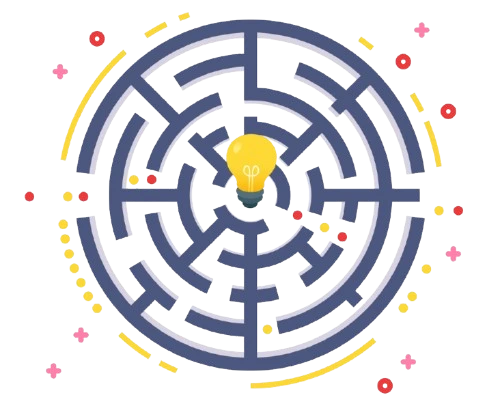
Maze as a method
Getting lost is a recurring fear. Yet it is a daily experience.
We get lost in decisions, in the choices that determine the success or failure of a project, in the attempt to keep everything under control.
The mistake lies in considering getting lost as an accident, something to avoid.Getting lost is not a deviation from the process.
It is the process.
When you follow your instinct and delve into the maze of questions — more than answers — a precise moment arrives: a closed door. You don’t know whether to force it, go around it, or turn back. It is there that the method comes into play. Don’t rush. Don’t immediately look for an alternative. Slow down the flow of thoughts.
Observe. Hold onto images, fragments, emotions.
The maze does not ask for quick solutions, it asks for presence. It does not clarify, it accumulates. Every step leaves a trace that is not immediately useful, but becomes necessary later. The meaning is not immediate. It settles.
Images do not arise from nothing.
They are already in the world. And they are already within us.
The work is not to invent them, but to recognise them. Traversing the maze of one’s own mind means accepting contradictions, blind spots, recurring obsessions. It is not about explaining what you see, but interpreting it without taming it.
Getting lost then becomes a conscious choice. Not a mistake, but a strategy. It is there that the gaze changes rhythm, that the image stops being illustrative and becomes necessary.
In the maze, you do not find answers.
You find the right form of your questions.